Plants That Attract Bees – A Lively Discussion
My Neighbor Thinks He’s The Only One With Plants That Attract Bees

My neighbor around the corner is a grumpy French man with the most beautiful garden, full of espaliered fruit trees, clematis vines, viburnums covered in white puff balls and lots and lots of flowering plants that attract bees, which he keeps. I asked him how he was the other day and he made his usual apocalyptic pronouncements, so I asked him how his garden was doing.
He told me he’d stopped gardening since there was no point in growing vegetables now that everyone gets their vegetables from the local food bank! I help out at the food bank and this pronouncement is debatable but I decided not to pursue that particular topic.
Not to be deterred, I asked him how his flowers were growing in this dull, overcast weather we’ve experienced lately. He replied that he only gardens plants that attract bees. When I mentioned that a lot of his bees were visiting my garden he huffed and asked which plants I had that could possibly attract his bees.

I said my lavender was very popular but he said I must grow lots of it to be a challenge. Then I mentioned scabiosa and he hurrumphed some more. How about snap dragons? Difficult because of their shape, he replied. Foxgloves? For bumble-bees. Well, I noticed a few minutes ago that bumble-bees seem to love anything that bees love. One was having a great time in my tradescantia patch which is a bee favorite.
Poppies, I offered up. I have some poor Iceland poppies that are doing their best under very difficult circumstances. There are little yellow spotted, snub nosed flying beetles called Cucumber beetles that eat their petals as soon as they open. I swear, they lie under cover of leaves, just waiting for the first petal to spring out from its shell and devour it as it’s unfurling! I would resort to spraying the little demons if it weren’t for the bees.

They don’t seem quite so intent on my opium poppies thank goodness, and the bees have a field day with those. A French shrug: what else should I expect?
Veronica is a plant that attracts bees. I hadn’t realized how popular it was until today when I was photographing the bee and bumble bee activity in my garden. The wind came up as I began so they were battling to stay in place and it didn’t do much for my photography. But the bees were hanging in there at the veronica bush.

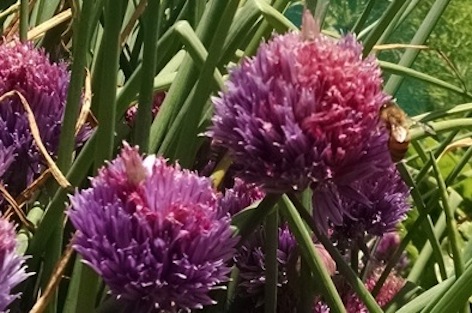
My wall of nasturtiums provides a feast for his bees. They are the sole survivors in my raised vegetable bed which has been invaded by a family of gophers which has eaten its way through my entire crop of garlic, salad greens and peas. Luckily my herbs are in another pot outside the kitchen and the bees hover around the chives which are flowering at the moment.

The mention of Desert campanula got a reluctant flicker of interest. Desert campanulas are wide spreading ground covers with indigo blue flowers that can live on virtually no water and they are defintiely plants that attract bees. I bought mine a couple of months ago as a seedling and now it’s taking over my little bed with its lax and laden stems. Bees love them. All campanula plants attract bees though, not only desert ones.
Pitcher Plant, I said as a parting shot. That got his attention. Pitcher plants are carnivorous and eat bees. How big is your garden? he asked. Not big enough, I replied.
Share if you enjoyed this article and happy gardening!
As usual, here is a link to a list of gopher resistant plants: http://www.groundcoversandgardening.com/gopher resistant plants.
If you want to buy plants that deer probably won’t eat, look here.

Very good write-up. I definitely appreciate this website.
Continue the good work!
Hi, I log on to your blogs regularly. Your writing style is
witty, keep up the good work!
Very good post. I definitely appreciate this site. Keep writing!
Hello.This post was extremely motivating, particularly since I was looking for thoughts on this topic last Friday.